Retro Nurse Leopard Sublimation: A Designer's Review
As a designer who spends more time staring at stitch maps and fabric swatches than I do sleeping, I am always cautious when a new graphic lands on my desk. We see thousands of files claiming to be the next big thing for craft business owners, but few hold up under the scrutiny of actual production. Today, I am taking a close look at the Retro Nurse Leopard Sublimation design. This isn't just a quick glance at a thumbnail; this is an evaluation of how this specific piece of art translates from a digital Illustrations category file into a tangible, sellable handmade product.
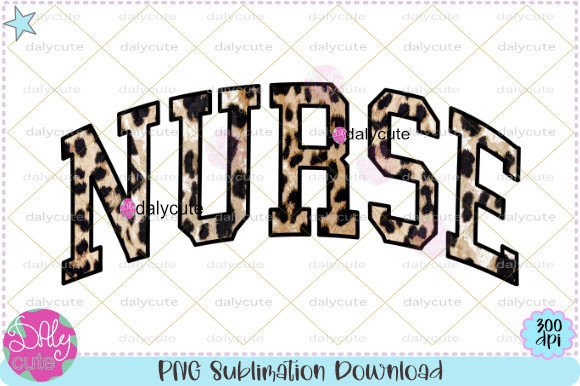
The first thing that strikes me about the Retro Nurse Leopard Sublimation is its mood. It hits that sweet spot between vintage nostalgia and modern boldness that is currently dominating the boutique apparel market. The leopard print element adds a wild, textured feel, while the nurse theme grounds it in a profession that deserves celebration. Visually, the layout feels balanced. For those of us converting these Graphics into embroidery, the shape suggests a strong central motif that would work beautifully as a chest logo on a scrub top or a large back design on a casual sweatshirt.
Visualizing the Finished Product
Let's get practical. Imagine you are preparing a custom order for a local nursing school graduation or a "thank you" gift for a hospital unit. You have this file, which comes as a high-resolution PNG (4500 x 3000 pixels at 300 dpi). Before you even touch your digitizing software, you need to assess the source material. The clarity of the Retro Nurse Leopard Sublimation at this resolution is a green flag. It means when you trace or manually digitize this image, you aren't fighting pixelation. You can clearly see where the leopard spots end and the uniform begins.
In a real-world scenario, I can see this design shining on a structured tote bag. The retro vibe pairs perfectly with canvas or heavy cotton. If I were stitching this, I would likely approach it as an applique design or a dense fill project. The leopard pattern offers a natural opportunity to play with thread colors. Instead of standard black and brown, one could use variegated threads to mimic the organic look of the print without needing thousands of color changes. However, if you are sublimating this directly onto polyester blends, the 300 dpi ensures the spots remain crisp and do not bleed into each other, maintaining the professional look required for commercial embroidery clients.
Performance on Different Fabrics and Items
Not every design works everywhere, and honest reviews require admitting limitations. The Retro Nurse Leopard Sublimation has a level of detail that demands respect regarding fabric choice. On a smooth, medium-weight cotton or a poly-cotton blend scrub top, this design will pop. The lines are distinct enough to hold their shape. However, if you are planning to use this on a highly textured fleece or a looped towel, you need to be careful. The finer details of the leopard spots might get lost in the fabric texture, turning what should be a sharp image into a muddy blob.
For sweatshirt embroidery, this design is a contender, but only if you manage your stitch density correctly. A heavy fill on a thick garment can lead to puckering. I recommend testing this on scrap fabric first. If you are digitizing this yourself, consider using a combination of satin stitch for the outlines and text (if any is added later) and a lighter fill stitch for the leopard areas to keep the garment flexible. For baby embroidery projects, such as a onesie for a "future nurse," you must ensure the backing is soft and the stitch count isn't too high, as infant skin is sensitive. The retro style is cute, but comfort is king for little ones.
Curved surfaces present another challenge. If you intend to put this on a cap, the width of the design matters. At 4500 pixels wide, the original aspect ratio suggests a landscape orientation. Fitting this onto a standard front panel of a baseball cap might require significant cropping or resizing, which could distort the nurse figure. It is better suited for the side panels of a tote or the flat back of a jacket. Always confirm your hoop size capabilities before committing to a project. If the design is too wide for your maximum hoop, you will have to split the design, which is rarely ideal for a cohesive illustration like this.
Commercial Viability and Brand Consistency
For the Etsy seller or small shop owner, the value of a design lies in its ability to generate trust and sales. The Retro Nurse Leopard Sublimation has strong "giftability." It speaks directly to a niche audience—nurses who love fashion and personality in their workwear. When a customer sees a well-executed version of this on a custom apparel item, it signals that the maker understands current trends. It elevates the perceived value of the finished product.
However, there is a critical technical note regarding the file format provided. The product description states you receive a PNG file, explicitly noting it is NOT SVG and contains watermarks in the preview (which should be removed in the purchased licensed version). This is crucial for embroidery designers. You cannot simply load a PNG into most embroidery machines. You must digitize it. This means you need software to convert the raster image into a stitch file (.pes, .dst, .exp, etc.). If you are not a digitizer, you will need to hire one or use auto-digitizing features, which often struggle with complex gradients like leopard print. Manual digitizing will yield the best results, allowing you to control the running stitch paths and underlay to ensure the design lasts through frequent washing.
Practical Tips for Execution
To get the most out of the Retro Nurse Leopard Sublimation, follow these steps before selling or gifting:
- Check Licensing: Since this is a digital asset intended for commercial use, verify the specific license terms regarding resale of the digital file versus the physical stitched item. Never resell the PNG itself unless explicitly allowed.
- Test Contrast: Before stitching on the final garment, print a black-and-white mockup. This helps you see if the contrast between the nurse silhouette and the leopard background is sufficient. If it looks gray and washed out in grayscale, it will lack definition when stitched.
- Stabilizer Selection: Given the potential density of a leopard print fill, use a cut-away stabilizer for stretchy fabrics like jersey knits. For woven fabrics like twill or canvas, a tear-away might suffice, but test first to prevent distortion.
- Thread Matching: Don't rely solely on the screen colors. Pull physical thread spools. The "retro" feel often relies on muted or specific earth tones that screens sometimes display too brightly.
- Wash Testing: Embroidery on dark fabrics requires careful attention to pull compensation. Wash your test sample twice to ensure the stitches don't gap or the fabric doesn't pucker after laundering.
In conclusion, the Retro Nurse Leopard Sublimation is a versatile and stylish asset for the right creator. It is not a "drag-and-drop" solution for those without digitizing skills, but for a designer willing to put in the work to translate this high-res illustration into quality stitches, the payoff is significant. It fits perfectly into the current market demand for personalized, niche-specific design assets. Whether you are making a single personalized gift for a friend or running a batch of small shop products for a career fair, this design offers the visual punch needed to stand out. Just remember: the quality of the final embroidered piece depends entirely on how well you adapt this graphic to the physical realities of thread and fabric.